


Zidney is a cloud-based educational platform that gives institutions one place to run learning services, author assessments, and read what's actually happening across their students — all on a single product foundation.
The challenge
Educational organizations run on disconnected tools and manual processes: student services in one place, content somewhere else, operations in spreadsheets. On the student side the stakes are high and the experience is overwhelming — broad syllabi, static material that loses attention, and uneven access to good preparation.
The brief was a single platform that could serve many institutions at once: flexible enough to adapt per organization, simple enough that students open it daily, and structured enough to scale without the cost ballooning with every new feature.
Market & opportunity
Demand for online exam preparation and proctoring has grown fast — online education and remote work (accelerated by COVID-19) pushed assessment online, while raising real concerns about security, privacy, and cheating. It's a large, active market with established players — Chegg, Pearson VUE, ExamSoft, ProctorU, Honorlock — but a fragmented one: most tools do a single job well and leave the rest to someone else.
Competitive landscape
I mapped both sides of the market. Preparation and learning tools — Quizlet, Quizizz, Kahoot, Brainscape, GoConqr, Khan Academy, Coursera — are engaging but stop at study; they don't run secure exams. Proctoring tools — TestWe, ProctorU, Examity, Honorlock, Proctorio — are secure and feature-rich, but expensive and walled off from preparation.
Scoring them on one matrix, a column kept coming up empty across every proctoring competitor: affordable pricing. That gap became the wedge — Zidney carries a student from engaging preparation, through a secure proctored exam, to institutional analytics, at a price the institutions in our market can actually pay.
The approach
I owned the product end to end — the vision and service architecture, the design system, and the frontend in Vue 3 and TypeScript. The defining decision was a modular, multi-tenant SaaS architecture: build a capability once and reuse it across organizations and across three role-based experiences. That keeps implementation and maintenance cost predictable as the platform grows instead of multiplying with it.
One platform, three surfaces
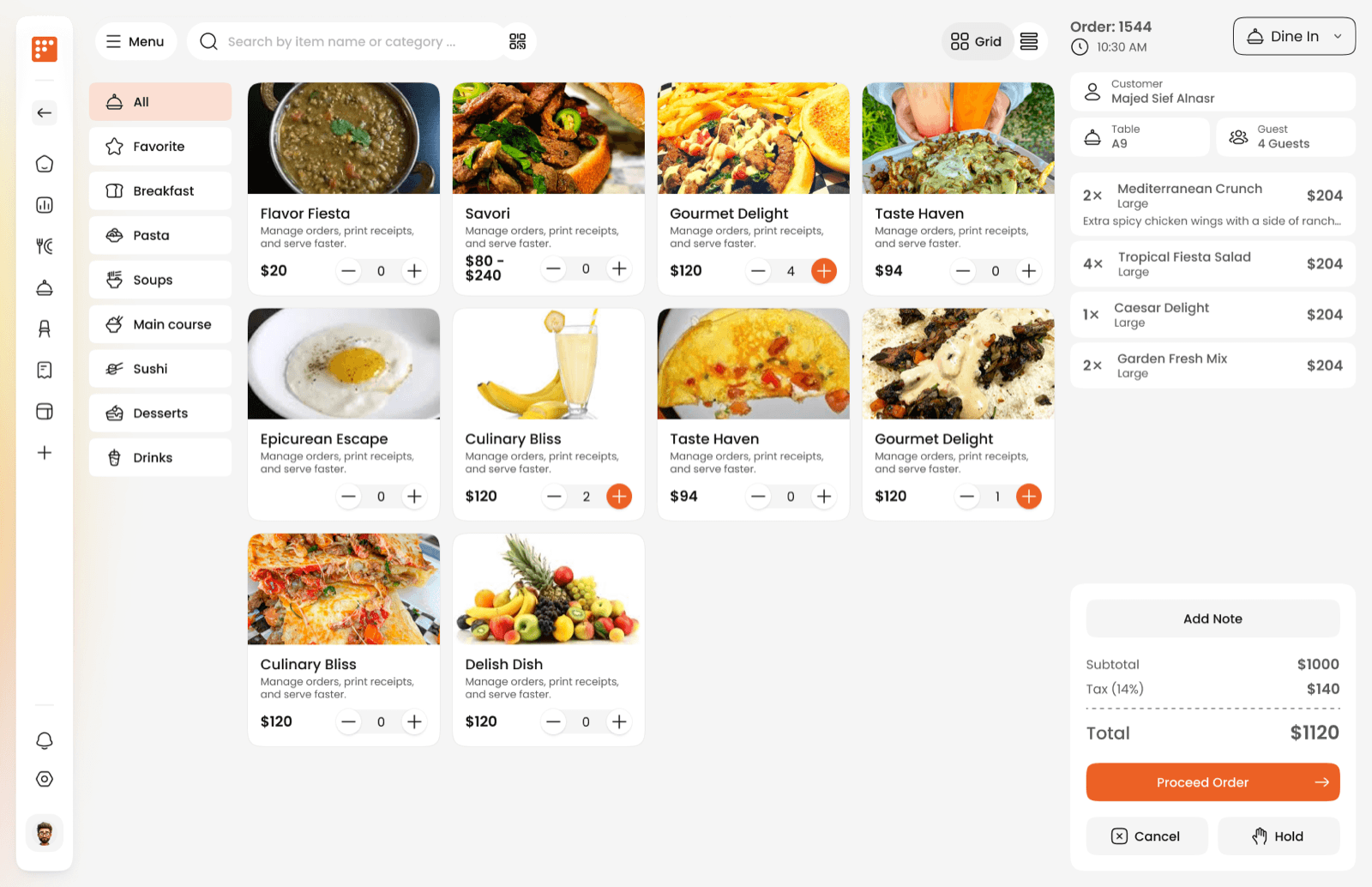
Everything runs on one shared foundation and one component library, exposed as three distinct experiences (shown in the slider above):
- Students get a focused daily workspace — continue learning, resume exams, follow a progress path, and collect certifications.
- Staff author content in a structured question builder: subjects, categories, answer explanations, and per-exam settings.
- Operators read the platform at a glance — active users, sessions, revenue breakdown, and growth by region.
What the platform does
The product spans the full assessment lifecycle, assembled from reusable parts rather than bolted-together tools:
- Prepare — personalized study plans built from a diagnostic, interactive materials, gamified progress, peer-to-peer study, expert tutoring, and offline access.
- Examine & proctor — secure exam delivery, live and AI-assisted proctoring, identity verification, browser lockdown, screen recording, and AI plagiarism detection.
- Operate — exam analytics, customizable reports, content authoring, and multi-institution administration.
Accessibility, multi-language support, real-time feedback, and a mobile app run across all three — so the same capability behaves consistently wherever it appears.
The product, live
The interactive prototypes below are the real Figma flows. Click through them.
The student dashboard — where learners spend their day: pick up a course, resume an exam, and watch their progress path fill in.
The admin console — where staff build the question bank and shape exams, with the same components the student side consumes.
The marketing site
The platform needed two front doors. A B2C site to convert individual students, and a B2B site to pitch institutions — both built on the same brand system so the story stays consistent from first visit to signed contract.
Selected screens
A spread across the platform — learner, exam, authoring, and operator. Drag to scrub, click any screen to enlarge.
Design system
A single set of tokens and components backs every surface, so a decision made once stays consistent everywhere. New screens assemble from existing parts rather than being drawn from scratch — which is precisely what makes a student app, an admin console, two marketing sites, and an operator dashboard maintainable by a small team.
The result
A scalable SaaS foundation that standardizes educational workflows into one digital platform and is ready for multi-institution rollout.
- Role-based apps
- 3
- Shared design system
- 1
- SaaS architecture
- Multi-tenant
- Frontend stack
- Vue 3 + TS
The component-driven architecture and shared platform services cut the effort of every future feature — consistency comes for free, and new institution rollouts build on the same foundation instead of starting over.